

Project x402 Opens AI Agent Payments to the World, Now Live Under the Linux Foundation
A new open-source protocol designed to let AI agents pay for things autonomously is now publicly available, marking a concrete step toward a future where software doesn't wait for a human to authorize every transaction. Project x402, built to handle machine-to-machine payments natively, has launched for AI agent use and is developed under the Linux Foundation's open governance model.
The project's source code is available on GitHub, where developers can inspect, fork, and contribute to the codebase today. Project x402 is open-sourced under the Linux Foundation and available on GitHub.
What Project x402 Actually Does
At its core, x402 is a payment protocol engineered for agentic AI systems, meaning software that acts on its own, makes decisions, and now, can transact without a person in the loop for each step.
Traditional payment rails were built for humans. You click, you approve, you authenticate. That flow breaks completely when the "user" is an AI agent executing hundreds of tasks in parallel. Project x402 addresses this directly by giving agents a standardized, programmable way to handle payments as part of their normal operation.
The protocol draws its name from HTTP status code 402, "Payment Required," a code that's been sitting in web standards since 1991, largely unused. x402 essentially activates that dormant standard for the agentic era, allowing servers to request payment and agents to respond, all within the existing HTTP infrastructure most developers already know.
Key capabilities include:
Autonomous payment execution without human approval at each transaction step
Compatibility with existing HTTP infrastructure, reducing integration friction
Programmable payment logic that agents can use to negotiate, authorize, and complete payments
Open governance through the Linux Foundation, meaning no single company controls the protocol's direction
Why This Matters for Agentic AI Development
The AI agent space has moved fast, but payments have lagged behind. Agents can search the web, write code, book meetings, and orchestrate complex workflows, but handling money has required hacks, workarounds, or a human babysitter standing by. That gap is a real ceiling on what agentic systems can actually do in production.
For developers building on platforms that involve commerce, data access, API consumption, or any service that costs money, x402 offers a path to fully automated pipelines. An agent could, in theory, identify a data source it needs, pay for access, retrieve the data, and continue its task, all without a single human touchpoint.
This is particularly relevant for tokenization workflows, where assets or services are represented on-chain and accessed programmatically. The intersection of tokenized assets and AI agents has been mostly theoretical so far. Infrastructure like x402 starts to make it operational.
Open Source Under the Linux Foundation
Placing x402 under the Linux Foundation is a deliberate governance choice. The Foundation's model means the project isn't controlled by a single vendor or startup with its own commercial interests. Decisions about the protocol's roadmap, standards, and compatibility go through an open process.
That structure matters for enterprise adoption. Companies considering building payments into their AI systems need to know the underlying protocol won't get acquired, pivoted, or paywalled. Open governance under an established foundation provides that assurance in a way a startup's GitHub repo simply can't.
Developers and organizations interested in contributing or integrating can access everything at the project's GitHub repository under the Linux Foundation.
Some of the key members includes:
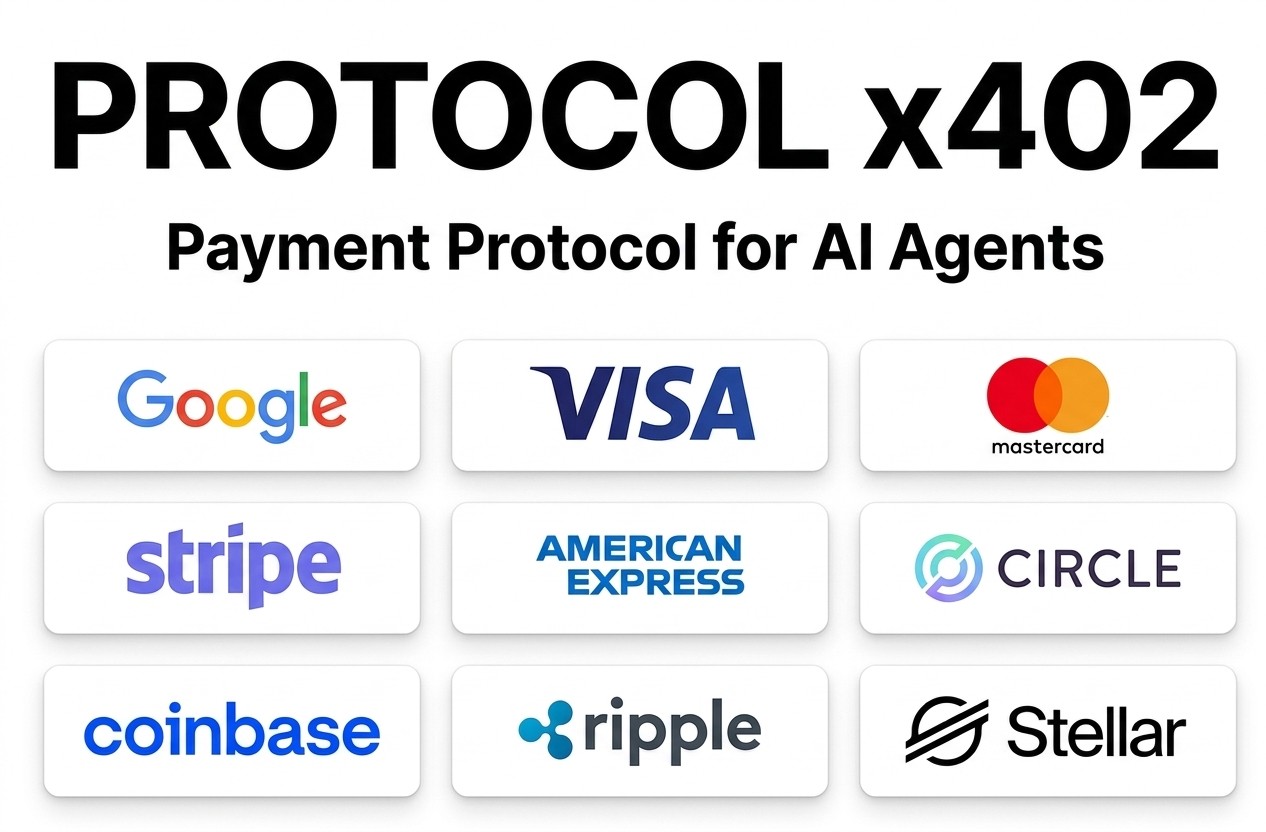
Where Agentic Payments Go From Here
The release of x402 doesn't mean the problem of AI agent payments is solved. Protocol adoption takes time. Developers need tooling, documentation, and real-world use cases to build confidence. Security questions around autonomous payments, especially at scale, will need thorough community scrutiny.
But the foundation is now public. That's not a small thing. The hardest part of building any new standard is getting something coherent and open into developers' hands so the real-world stress-testing can begin.
For anyone working at the edge of AI infrastructure, tokenization, or agentic system design, x402 is worth watching closely. The era of agents that can actually pay their own way is starting to look less like a roadmap item and more like something you can clone and run today.
0 Comments
Log in to join the conversation.No comments yet. Be the first to share your thoughts.