
Senior Editor, News,GameDeveloper.com
July 1, 2026
6 Min Read
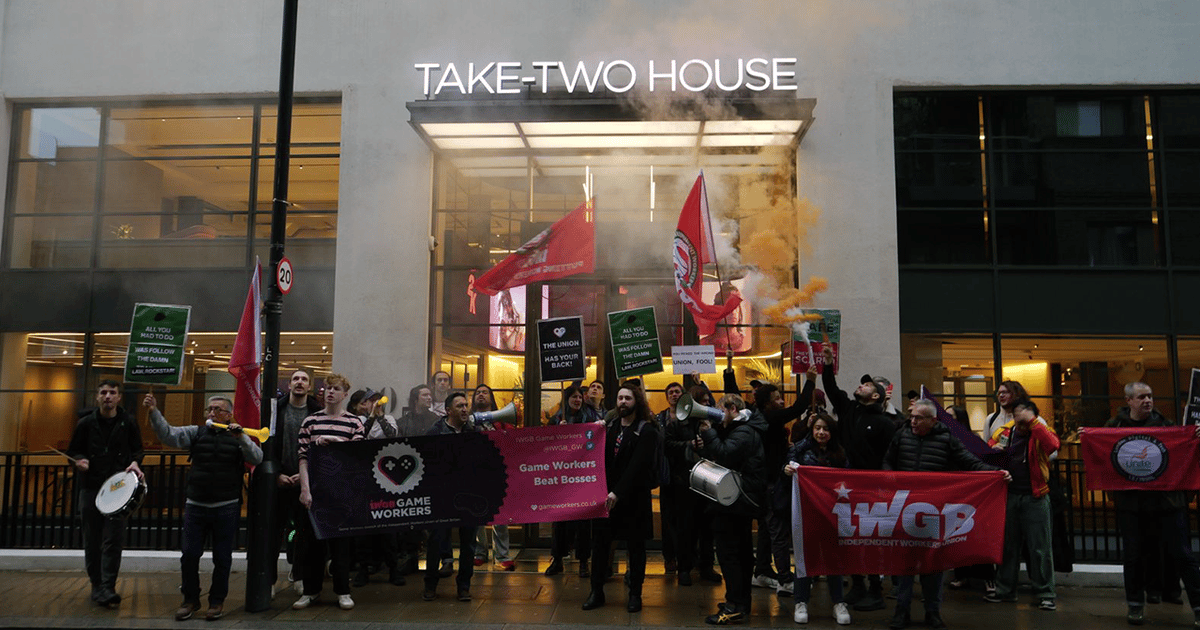
Multiple Rockstar developers have accused the company of failing to address gender-based pay inequity, actively striving to facilitate crunch in the United Kingdom, and weaponizing bonus payments against employees.
In a wide-ranging interview with Game Developer, three members of the Rockstar Game Workers Union (RGWU)—who chose to remain anonymous for fear of reprisal—claimed the studio is failing the people responsible for crafting Grand Theft Auto VI, which is expected become one of the most lucrative video games in history when it launches in November 2026.
Those who spoke with Game Developer are not part of the cohort of fired workers currently embroiled in a legal dispute with the Take-Two Interactive subsidiary over allegations of union busting. They are, however, all union members (currently seeking voluntary recognition) who feel Rockstar is letting them down.
Discussing the state of compensation at the company, they explained how a lack of transparency around pay and bonuses can leave staff in the lurch. They claimed that, as it stands, a considerable portion of most employees' compensation package comes in the form of bonuses that fluctuate wildly, often without obvious justification.
Related:A risk-averse video game industry is failing marginalized developers
They claimed that lack of consistency often means the compensation received by Rockstar workers falls below the market rate when compared with adjacent industry work.
"When the bonus is particularly good, it can be a windfall, but often the bonus is disappointing and one can end up being paid considerably less than expected for the year. The reasoning given for this is often nebulous, inconsistent between departments, even inconsistent between team members within the same department, and sometimes hinges on completely subjective or retroactive criticisms," said one source.
Game Developer was also told that promotions are difficult to secure at Rockstar because the studio regularly shifts the goalposts when career progression is discussed.
"The main problem is that [bonuses and progression are] all completely discretionary for the company, and they are under no obligation to show their working," continued one source. "Employees want good pay, and if literally anything they do that year could affect it, they will naturally feel they have to be as pliable as possible to their boss's whims. Imagine [how you might feel if] a fifth of your salary could be withheld without any justification or based on a single surprise factor."
On the subject of compensation, we were told the gap between median wages for different genders has actually widened at Rockstar and that initiatives aimed to address that imbalance have been scrapped. It was also claimed that nightshift workers no longer receive any extra benefits to offset their unsociable hours.
Related:EVE Online's cross-platform game engine framework is now fully open source
Union workers at the company said all of the above has coalesced to create a sense of imbalance and injustice within the studio. They feel some Rockstar employees are not being adequately compensated for their role in building a industry-leading title in Grand Theft Auto VI, which Take-Two boss Strauss Zelnick recently described as "arguably the most anticipated entertainment property of all time."
"There are those [within Rockstar and Take-Two] with hundreds of millions of pounds, there are those receiving excellent pay for their work and are grateful, and there are certainly those that are woefully underpaid for their effort and the incredible profits gained. Especially when you consider that the company gets hundreds of millions in tax breaks for their UK workers," added one source.
"It seems the company thinks that offering specific and limited compensation as an incentive for overtime means it no longer qualifies as crunch."
Notably, we were informed that Rockstar attempts to normalize crunch—the widely-criticized practice of forcing employees work extraordinary amounts of overtime to bring a video game to market—by essentially baking it into the contracts of UK workers.
Related:Grand Theft Auto developers seek union recognition at Rockstar
"Crunch is prevalent enough that the company built into our contracts, as standard, an opt out of the Working Time Regulations [a UK employment right that can be vountairly relinquished by employees] that stops your employer being able to ask you to do more than about 10 hours extra each week," explained one source.
"The union successfully ran a campaign to inform people they could opt back in to the regulations at any time, which resulted in Rockstar management simplifying the process and removing the obligation to meet with HR. Part of the problem with crunch is that there is not an agreed definition, and now it seems the company thinks that offering specific and limited compensation as an incentive for overtime means it no longer qualifies as crunch."
Game Developer was told that while there are teams within Rockstar that never crunch, there are also departments that "seem to never get out of it—and often colleagues do not realize the opposite group exists." It's an accusation the studio has faced before.
A lack of remote working provisions is another point of contention for union members, who claim the ability to work flexibly between their homes and the office—introduced in response to the COVID-19 pandemic—enabled staff (and especially those with families) to strike a better work-life balance. Sources told Game Developer that Rockstar had "promised" full-time office work would not return, before reneging on that pledge in order to "stimulate collaboration."
Despite that pivot, we were informed company leaders are still able to work flexibility if they wish. Of course, the rub here is that it's now up to those same Rockstar and Take-Two leaders accused of cultivating a sense of disparity to liaise with union members to help create better, more equitable working conditions.
"For us workers, we have no say in who our superiors are. We must try to work with them regardless and hope that they are more interested in engaging with their employees to build some mutual trust moving forward," explained one source.
For better or worse, union members feel there will only be meaningful change if Rockstar and Take-Two leaders are willing to accept accountability for their alleged failings—although there's hope that formally unionizing will perhaps encourage some welcome introspection at the top of the executive totem pole.
Collective action, we're told, feels like a small risk that could yield big rewards in the current industry landscape.
"If it seems like a big risk to unionize, it is worth remembering that plenty of non-union members lose their jobs unfairly every year, the difference is that it happens with no scrutiny. And if you think organizing will not make a difference, it already has," said one source.
"Since October, there have been unprecedented average wage increases in represented studios, for the first time ever there is actually some financial incentive for crunch, and several other policies are changing after years of frustration. The timing is not coincidental—organizing works."
A Take-Two Interactive spokesperson provided the following statement when approached for comment:
"We strive to make the best games possible by giving our talented teams world-class work environments and ongoing career opportunities. We have fostered a culture which is focused on teamwork, excellence, and kindness, and where we support and reward the team across all levels of the business through competitive compensation and benefits policies. We are proud that as a result, our employee retention is well above the industry standard. We have received a request from a union seeking to discuss voluntary recognition. We value an open and constructive dialogue with all stakeholders and will arrange to meet."
About the Author

Senior Editor, News, GameDeveloper.com
Game Developer news editor Chris Kerr is an award-winning reporter with over a decade of experience in the game industry. His byline has appeared in notable print and digital publications including Edge, Stuff, Wireframe, International Business Times, and PocketGamer.biz. Throughout his career, Chris has covered major industry events including GDC, PAX Australia, Gamescom, Paris Games Week, and Develop Brighton.
0 Comments
Log in to join the conversation.No comments yet. Be the first to share your thoughts.