
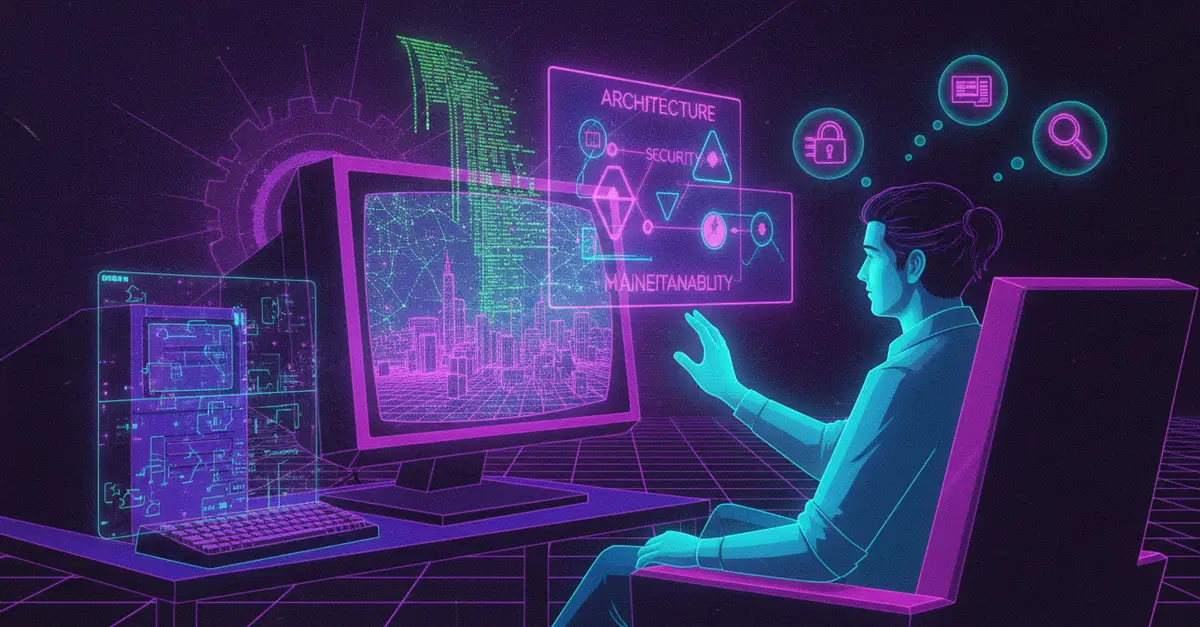
For a long time, I thought vibe coding was simply about asking AI to generate code.
The more I build, the more I realize that's only a small part of it.
The real skill isn't writing prompts it's making sound engineering decisions.
AI can generate a login page, an API, or even an entire application in minutes. What it can't reliably do is make the decisions that determine whether a product is secure, scalable, and maintainable.
Those decisions still require human judgment.
As developers, we're responsible for answering questions like:
Is this the right architecture for the product?
How should user data be secured?
Will this design scale as the application grows?
Is the generated code maintainable and easy to extend?
What are the trade-offs between different solutions?
How do we identify and fix flaws in AI-generated code?
These are engineering problems not prompting problems.
I believe the developers who will stand out over the next decade won't necessarily be those who write code the fastest. They'll be the ones who can think critically, design robust systems, evaluate AI-generated solutions, and ship reliable products.
That's the direction I'm pursuing.
As a frontend developer, I'm expanding into AI, backend engineering, and system design because I want to understand how great products are built from end to end—not just how they're coded.
AI isn't replacing software engineers.
It's raising the bar for what software engineering looks like.
What's your perspective?
Do you think vibe coding will evolve into a respected engineering discipline, or will it remain a temporary trend?
0 Comments
Log in to join the conversation.No comments yet. Be the first to share your thoughts.