
GD
Usage First, Implementation After: A Principle of Software Development
The Usage First, Implementation After is a software development principle you can use to make code expressive, projects fast and users happy.
@fluent-c
Publisher
10
Posts
The Usage First, Implementation After is a software development principle you can use to make code expressive, projects fast and users happy.
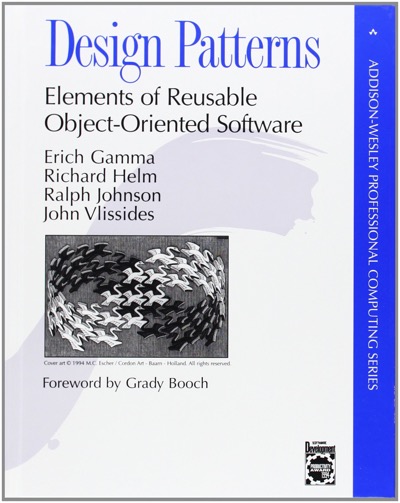
In this episode of our series ond design patterns and design principles, we examine the Factory method design pattern and relate it to two design principles
Storing a reference to an lvalue or an rvalue in the same object has always been difficult in C++. With std::variant, it becomes simple.
Some developments seem to require from you to copy paste code. Here is a way to approach those developments to get the most out of them.
Abstract Factory is one of the GoF design patterns to create consistent objects. Here is how it works and what design principles it relates to.
A cartesian product calls a function on all the possible combinations of the elements coming from several collections. Here is how to make it in C++.
A Cartesian product consists in applying a function to all the possible combinations of the elements of several collections. For example, consider the three following collections: auto const inputs1 = std::vector<int> {1, 2, 3}; auto const inputs2 = std::vector<std::string>{"up", "down"}; auto co...

Error handling often leads to unclear and incorrect code. By asking one simple question, we can often get away without handling errors in our code.
This article explains the Visitor design patterns, and shows how it can bring high cohesion to your classes.

Since the beginning of programming our views have been shaped by a handful of paradigms. Which one is the best to write expressive code? And is there a definitive paradigm? This is what we discuss in this article.