
![[Book Sharing] Taiwan's AI Future: Analyzing Trends, Local Landscape, Corporate Strategy, and Personal Development](https://wps.hkprog.org/storage/posts/images/f84b2fd45004f20c49d892d2d8ce71feaaba92f0.webp)

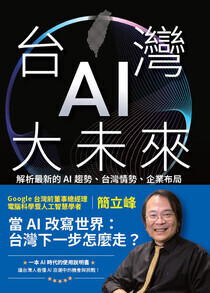
Taiwan's AI Future
Analyzing the latest AI trends, Taiwan's situation, corporate strategies, and personal development
Author: Chien Lee-feng, Hsiao Yu-pin
Publisher: Business Weekly
Enter fullscreen mode Exit fullscreen mode
Recommended links to buy the book:
- Readmoo: Click here to buy.
Preface:
This is the second book I finished reading in 2026. It is a fairly new book, released at the end of 2025. I bought it because my company invited Chien Lee-feng to give a speech in 2024. Later, I happened to see his book on my e-book shelf and decided to take a look.
Outline
When AI rewrites the world, what is Taiwan's next step?
Former Managing Director of Google Taiwan, computer scientist, and AI scholar—Chien Lee-feng
Writes the first instruction manual for the AI era for Taiwan,
Helping Taiwanese people understand the opportunities and challenges of the AI age!

The world undergoes a digital revolution every ten years:
● 1990: Personal computers start the computer generation;
● 2000: The Internet creates the web generation;
● 2010: Mobile devices and social media lead the mobile generation;
● 2020: Generative AI like ChatGPT makes a shocking debut...
Now is the AI generation, where the rules of the game are completely rewritten, and the gap is rapidly widening between 1:99.
Will you fall behind and be eliminated, or seize the opportunity and become a 1% winner?
This book takes you deep into the AI landscape to master the key to transformation!

【AI Development under Geopolitics】
As the world undergoes an AI-driven paradigm shift, the US sees AI as the key to its return to hegemony. This not only predicts that AI productization will completely subvert the world's rules of operation but also opens up infinite possibilities for the future evolution of AI. From the "Manhattan Project" to the "Stargate" layout, this book will deeply analyze the global situation under the US-China tariff war and provide insights into how AI reshapes the international order.
● The 1:99 challenge: Countries, companies, and individuals who seize the opportunity may become the unique "1" that far surpasses others, while others become the "99" lagging far behind.
● The emergence of DeepSeek has subverted the US monopoly, bringing a "rebalancing" to the AI world, equivalent to inventing the "poor man's atomic bomb."
● If the pace of domestic chip production is not accelerated, an unproductive America will have no tomorrow and will directly lose competitiveness in the AI battle. TSMC has thus become the X-factor in the US-China confrontation.

【Taiwan Looking at the World】
The AI wave is sweeping the globe; this is not just a technological innovation, but a key turning point for national development. In this giant wave, Taiwan not only has the uniquely endowed "Silicon Shield" TSMC but also sees a golden decade to become "the world's Taiwan" as AI challenges and opportunities coexist. This book gives you a glimpse into the future potential of Taiwan's manufacturing industry and how old and new enterprises are redefining "Made in Taiwan."
● Facing geopolitical changes, Taiwan's manufacturing-oriented enterprises should go with the flow. Through overseas production and R&D in Taiwan, they can create a "Taiwan + N (foreign)" model, helping Taiwan remove the red supply chain and join the US-led supply chain.
● An island's market is always outside. Flying to Japan or the US for travel or business for a few days does not equal internationalization. Internationalization is daily life being impacted by different cultures.

【AI Practice in All Walks of Life】
The AI era is a key moment for corporate transformation and talent reinvention. Only companies that dare to pivot will have competitive opportunities. This book lists cases of how companies in different industries respond to AI and provides practical strategic directions to guide Taiwan's corporate transformation to seize the AI market and move towards growth and innovation.
● The impact of AI can be compared to "musical chairs." From tech giants to SMEs, whether it's "emptying the cage for new birds" (industrial restructuring) or empowering employees, wherever the wind blows, new opportunities lie there.
● "Old-ventures + New-ventures": Shifting from software integration to hardware-software integration, combining the advantages of both, makes AI applications possible.
● Developing Sovereign AI doesn't end with outsourcing. Whether building your own model or asking tech giants for help, the strategy must be planned clearly, otherwise, it might just be a waste of money.

【Mastering the Golden Key to Personal Learning and Career】
As a member of the AI generation, how to use AI to improve learning efficiency while clearly identifying AI's limits is an important task. This book suggests how to use AI tools while pointing out that human differentiated experience will become an irreplaceable treasure. Therefore, cleverly accumulating personal unique value is the only way to remain invincible in the AI era.
● AI likes to use certain specific sentence patterns because AI is a probabilistic concept, so naturally, there are some patterns. But conversely, precisely because its data volume is large enough, it can try various combinations that humans have never seen.
● AI has raised the "passing line" of many jobs from 60 to 80 points in one fell swoop, forcing all industries to redefine the core competencies and value of human labor.
● In the AI era, senior talents with professional foundations learn AI the fastest because their long-term accumulated knowledge can judge the correctness of AI-generated content. This AI paradigm shift has, in turn, amplified the advantages of the older generation.

This is an AI survival guide tailored for Taiwan, helping you fully grasp the context of the AI revolution and find the path to growth for the nation, enterprises, and individuals amidst the changes.
Enter fullscreen mode Exit fullscreen mode
This book can be described as an "AI Era Survival Manual" tailored for Taiwanese people and businesses by Dr. Chien Lee-feng, former Managing Director of Google Taiwan, and senior media professional Hsiao Yu-pin. Dr. Chien uses a very pragmatic and precise local perspective to analyze how Taiwan should reposition itself, how companies should play the international game of hardware-software integration, and how individuals can avoid falling into the crisis of "brain outsourcing" under this crazy AI wave.
I have organized the four core frameworks of the book for you to help you grasp the overall context through this overview:
Overview of the Book's Four Core Frameworks
| Category | Core Pain Points & Trends | Breakthrough Strategies for Taiwan & Individuals |
|---|---|---|
| 1. Latest AI Trends | AI brings high centralization and unification, potentially evolving into a 1:99 disparity in capabilities and resources; however, the rise of emerging forces like DeepSeek is bringing "rebalancing" opportunities to the world. | Understand the essence of AI's "probability and language architecture," find breakthroughs outside of US monopolies, and raise the lower limit of basic capabilities. |
| 2. Taiwan's Positioning | Although Taiwan is a key X-factor in geopolitics and AI chips, it also faces structural constraints like island involution, a declining birthrate, and the "five shortages." | Completely shift from a "farmer's mindset" to a "navigator's mindset," taking "going global" as the only way to survive, and stepping beyond Taiwan's borders to expand digital territory. |
| 3. Corporate Transformation | Taiwan is "extremely strong in hardware, extremely weak in software." Software startups lacking computing power and business scenarios find it hard to survive independently on the international stage. | Promote "Old-ventures (hardware giants) + New-ventures (software applications)" collaboration, using Edge AI to add "brains" to powerful hardware devices. |
| 4. Personal Development Keys | Facing the invisible crisis of "brain outsourcing," mediocre professional newcomers who only teach by the book and lack practical experience will be the first to be hit. | Shift from a "problem-solving" habit to a "problem-posing" mindset, creating unique value through high-frequency "repeated interaction and correction" with AI. |
I. Latest AI Trends: The 1:99 "Superhuman" Challenge
- Extreme Concentration of Power: The AI era has brought high centralization, with global tech giants holding a massive advantage. Among thousands of languages worldwide, only about a hundred can be used in mainstream AI, and English and Simplified Chinese are deeply optimized. This means language and cultural frameworks are the primary keys to mastering AI.
- The 1:99 Watershed: The cruelest part of this tsunami is not the elimination of ordinary people at the bottom (AI actually raises the floor for ordinary people), but the elimination of "mediocre professionals." The 1% who seize the opportunity will become superhumans through AI, taking the capabilities and opportunities of the 99%, while others become the lagging 99%.
- Rebalancing the AI World: The recent emergence of non-US low-cost, high-efficiency models has broken the absolute monopoly of US tech giants. This has been described as inventing the "poor man's atomic bomb," bringing an opportunity for a reshuffle to countries and enterprises with fewer resources.
II. Taiwan's Situation: From "Island Involution" to the "Age of Discovery"
- The Geopolitical X-Factor: TSMC and Taiwan's hardware supply chain hold a key position in the US-China tech confrontation because Taiwan possesses the characteristic of "knowing the demand earliest" (e.g., being able to grasp system requirements like server voltage changes first), giving it an important identity in the adjustment of global infrastructure.
- Breaking the Farmer's Mindset: Most Taiwanese companies are used to an "island mindset," where the "sea is invisible" in daily life, making it easy to fall into involution within a comfortable echo chamber. Facing the structural crisis of a declining birthrate and plunging newborn numbers over the next 20 years, Dr. Chien urgently calls for a shift to a "navigator's mindset," because "going global" is the only way for all industries in Taiwan to survive.
- Extension of Digital Territory: Taking TSMC as an example, AI allows Taiwan to replicate factories overseas and have them operated remotely by Taiwanese engineers. Taiwan should also turn the crises of aging and labor shortages into opportunities by actively developing robotics and its own Sovereign AI to avoid a national-level digital divide.
III. Corporate Layout: Hardware-Software Integration, Letting "Old-ventures + New-ventures" Dance Together
- Using Edge AI to Add Brains to Hardware: Edge AI (referring to terminal devices having local computing power without relying entirely on the cloud) is Taiwan's domain. It is hard for pure software startups in Taiwan to compete with international giants, but we can embed and bundle AI services directly into powerful hardware devices used worldwide (such as Giant bicycles or various terminal equipment), significantly increasing added value.
- Old-ventures plus New-ventures Playing the International Game: Today's AI startups can hardly succeed without the data, computing power, and real "business scenarios" provided by a "rich father." Therefore, hardware giants (Old-ventures) should join hands with software startups, combining the international channels of the former with the flexible applications of the latter to go global as a team.
- Pragmatic Planning for Sovereign AI: Developing Sovereign AI cannot just be about blindly outsourcing business to tech giants. Whether building their own models or cooperating with major manufacturers, enterprises must clearly plan their own strategies and field applications; otherwise, it is just a waste of money.
IV. Personal Development: Refuse "Brain Outsourcing," Be a High-Level "Questioner"
- Shift Thinking from "Solving" to "Posing": AI's capabilities are "asked" out. The more professional the question, the more accurate the response. The future workplace will no longer value rote memorization; core competencies will shift to problem definition, critical thinking, and direction control. Only "questioners" who can demonstrate proactive influence will win.
- Using "Iterative Refinement" to Deepen Learning: If you just throw a question to AI, get an answer once, and copy it directly, this behavior is equivalent to plagiarism. However, if you can go back and forth with AI to modify it 10 times, that is a "learning" process; if you continue to repeatedly correct and adjust up to 100 times, that is truly approaching the level of "creation."
- Accumulating Irreplaceable "Differentiated Experience": Functions like memory and calculation can be outsourced to AI, but your unique personal experience, cross-disciplinary collaboration ability (π-shaped talent), and human critical thinking are the irreplaceable treasures of the AI era. Cleverly using AI tools to amplify your output is the only way to avoid becoming the "lost generation" eliminated by the times.
The Core Soul Quote of the Book:
"Change is humanity's eternal unease, but from a macro perspective, what AI brings is an opportunity to make humans more capable." When calculation and memory are outsourced from the brain, be sure to retain your power of thinking and creation.
This video Interview with Dr. Chien Lee-feng: Who is the Lost Generation of the AI Era deeply explores the "1:99 Superhuman Challenge" and workplace mindset transformation mentioned in the book, helping you more intuitively understand how to retain personal competitiveness in this era of brain outsourcing.
Personal Thoughts
From my own perspective, this book organizes many recent AI development processes both domestically and internationally. It provides many future insights based on Chien Lee-feng's own experience as the former Managing Director of Google Taiwan. It often shares advice on how various industries should face the AI era. This part is frequently mentioned in his speeches and is shared and explained quite clearly.
Personally, I feel that one can just skim through this book. In comparison, I still prefer Dr. Chien Lee-feng's speeches, which provide more impact and inspiration.
0 Comments
Log in to join the conversation.No comments yet. Be the first to share your thoughts.