
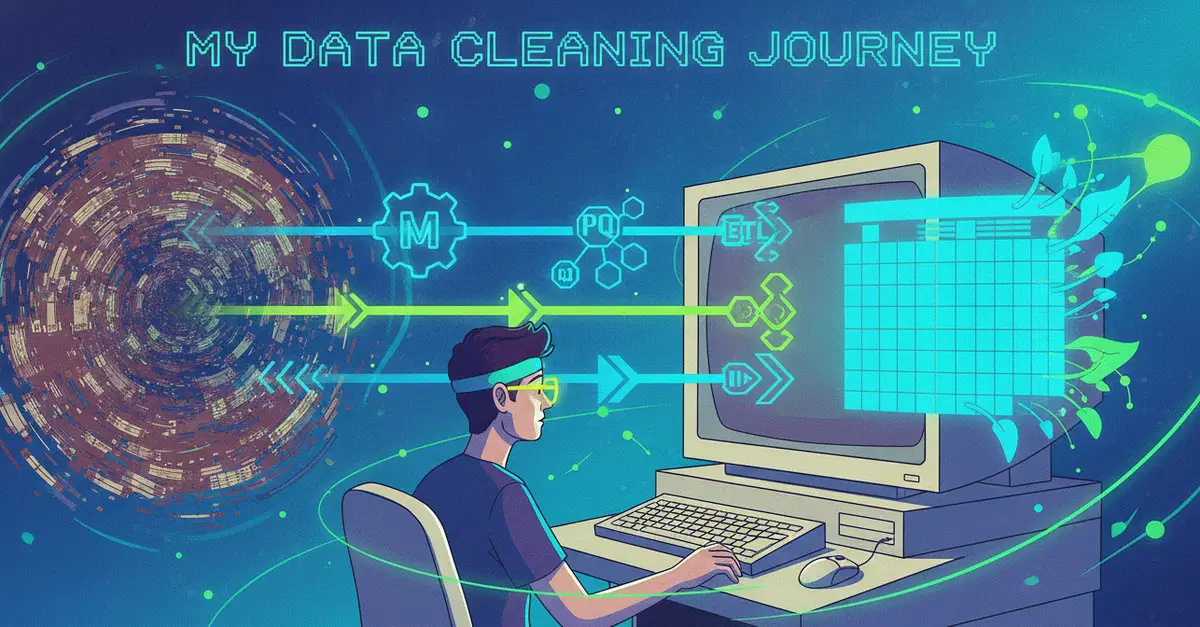


When I first heard the term ETL (Extract, Transform, Load), I thought it sounded like something only advanced data engineers dealt with. But as I’ve been learning, I realized ETL is the backbone of almost every data project. It’s the process that makes raw data usable, and without it, analysis can quickly fall apart.
The first lesson was short but powerful. ETL is about moving data from one place to another, transforming it along the way so it’s clean and ready for analysis. I remember thinking: “So this is how companies make sense of the chaos in their databases.” It felt like peeking behind the curtain of how insights are really built.
Then came the part about Excel macros. At first, I was intimidated, macros sounded complicated. But once I tried them, I realized they’re like little helpers that automate repetitive cleaning tasks. Instead of manually fixing hundreds of rows, I could write a macro and let Excel do the heavy lifting. It felt like discovering a secret shortcut.
I even laughed at myself when I realized how much time I had wasted before, manually correcting data. This was a turning point: I started to see how automation can save not just minutes, but hours.
Finally, I explored Power Query. If macros are shortcuts, Power Query is like a full toolkit. It lets you connect to different data sources, transform them, and keep everything organized. I loved how visual it was dragging, dropping, and shaping data felt almost creative.
I remember thinking: “This is what makes data cleaning less of a chore and more of a craft.” It gave me confidence that even messy datasets could be tamed.
Learning ETL, macros, and Power Query taught me that data cleaning isn’t just technical, it’s about mindset. It’s about respecting the data, being patient, and finding smarter ways to work.
I used to think cleaning data was boring, but now I see it as the foundation of every meaningful insight. Without clean data, analysis is just noise.
✨ Takeaway:
If you’re starting out in data, don’t underestimate the power of cleaning. It’s not glamorous, but it’s the skill that separates good analysts from great ones.
0 Comments
Log in to join the conversation.No comments yet. Be the first to share your thoughts.