
![[Book Sharing] Tsaisang’s Tales of the Strange: Japanese Mythology, Ghost Stories, and Sometimes Taiwan](https://wps.hkprog.org/storage/posts/images/958da2d585c591e17704393b463370a7f819b05f.webp)

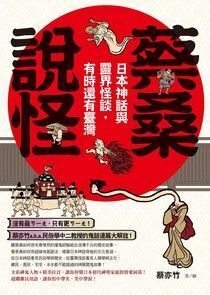
Tsai-sang Talks About the Strange
Japanese Myths and Spiritual Ghost Stories, and Sometimes Taiwan
Rated by 73 people
Author: Tsai Yi-chu  Publisher: Eurasian Publishing Group
Enter fullscreen mode Exit fullscreen mode
Recommended links to buy the book:
- Readmoo: Buy here.
Foreword:
This is the first book I finished reading in 2026. I didn't write any book reviews in the first half of this year because I only read a little bit of many books. I spent quite a long time reading this one as well; I happened to see it while looking for books, and it turned out the second half of the book was quite captivating, so I finished it all in one go.
Synopsis
Not just crazy, but crazier! Tsai Yi-chu a.k.a. the Chuunibyou Professor of Folklore unleashes a flood of ghost stories!

◆ How do Japan's first generation of gods play out soap opera dramas every day?
◆ How does Japanese mythology hide various "sexual metaphors" in its stories?
◆ Yokai aren't all troublemakers; which ones can make you rich or send you to heaven?
◆ Is there bullying in the world of Yokai? Can just getting old and ugly make you a Yokai?
◆ Is the Jade Emperor actually not a CEO? Is Guanyin Bodhisattva actually a foreigner?
◆ Can Taiwan also have "Shigong (Priest) Watches" and "Yokai Pokémon"?

Taiwanese people fear ghosts, Japanese people fear ghosts, people all over the world fear ghosts...
It doesn't matter if you haven't seen "Ghost Stories," come here to listen to Tsai-sang talk nonsense and discuss gods and ghosts, so you won't feel "creepy" anymore!

Most people's impression of Japan is—endless temples to visit, super cute and otaku cosplayers, AV actresses... Hey! There must also be supernatural stories, Sadako, Yokai, and various urban legends!

Listen to how Tsai-sang combines hair-raising ghost encounters with historical stories passed down through the ages, and see how he uses super "grounded" slang to reveal the cultural meanings behind Japanese mythology!

Japanese Folklore PhD Tsai Yi-chu has gathered years of research on folklore, using myths and ghost stories as a medium and easy-to-understand "netizen" language to lead readers into Japan's "Gods and Monsters." This includes the genealogy of Japanese gods, the connection between Yokai and culture, and the hidden meanings within. At the same time, he allows Taiwan's various gods to actively participate in the text through a Taiwan-Japan friendly crossover, making you understand ghost talk and become obsessed with gods and ghosts! After reading, I guarantee your mom will ask why you are reading this book on your knees!

Because "Tsai-sang Talks About the Strange" will make you shout on your knees: "What on earth was Japanese mythology on? I want some of that too!"
Enter fullscreen mode Exit fullscreen mode
This book isn't one of those stiff academic papers; it's a cultural analysis book where Tsai Yi-chu (Tsai-sang), a PhD in Folklore from the University of Tsukuba, uses super "grounded" netizen slang and a hilarious style to strip down Japanese mythology and spiritual ghost stories for you! The most brilliant part is that he doesn't just talk about Japan; he occasionally pulls back to Taiwan's folk perspective for comparison.
Here are the three core sections and key points of this book refined for you:
Summary of the Three Core Sections
| Section Category | Core Research Focus | Tsai-sang's "Taiwanese-style Plain Language Interpretation" and Highlights |
|---|---|---|
| 1. Japanese Mythological Prototypes | The birth of Japan's first generation of gods (Izanagi, Izanami, Amaterasu, Susanoo) and the belief in vengeful spirits in history. | Uses "Sex and violence, gore and SOD collections" to roast the absurd plots of Japanese mythology. Introduces the "Vengeful Spirit Fan Club" of ancient Japanese history and endemic species like Tengu. |
| 2. Yokai and Urban Legends | How rural ghosts and monsters evolved into modern urban legends over time (e.g., Slit-Mouthed Woman, Super High-Speed Granny). | Yokai are "new pets of urbanization," reflecting the collective anxiety and loneliness of modern people, and the media's role in fueling the supernatural trend. |
| 3. And Sometimes Taiwan | Cross-sea interactions and cultural comparisons of beliefs between Taiwan and Japan (e.g., Nagasaki Mazu and Tainan's General Flying Tiger). | Demonstrates a "Taiwan-Japan Friendly Crossover." Reflects on Taiwanese people's own cultural roots and subjectivity through the lens of Japanese ghost stories. |
I. Japanese Mythology: A First Family More Dramatic Than a Soap Opera
- Love and Hate of the First Family: The fallout process of Japan's creator gods (Izanagi and Izanami) is absurd and horrifying (the wife turns into a rotting corpse in Yomi, the husband is so scared he flees and divorces). Their descendants, the Sun Goddess Amaterasu and her brother Susanoo, also have a love-hate relationship. Tsai-sang jokingly says that from a modern perspective, these plots are simply a collection of various horror and gore scenarios.
- Vengeful Spirit Fan Club: Many high-ranking gods worshipped in Japanese history (such as Sugawara no Michizane, the God of Learning, and Emperor Sutoku) were actually "victims of political struggles who died miserable deaths." Because later generations feared they would become vengeful spirits and seek revenge, they quickly built shrines to worship them as gods, forming Japan's unique culture of vengeful spirit worship.
II. Yokai and Urban Legends: Collective Anxiety of Modern People
- Yokai are the City's New Pets: Former Yokai (like Kappa and Yama-uba) lived deep in the mountains and forests, representing human awe of nature. After urbanization, Yokai also "moved into the city," evolving into urban legends like the Slit-Mouthed Woman and the Super High-Speed Granny.
- Reflecting the Loneliness of Real Society: The birth of these modern legends appears to be horror stories on the surface, but at their core, they reflect the alienation and collective anxiety of urbanites. At the same time, the book reviews the "rise and fall of the supernatural craze" fueled by Japanese mass media (TV supernatural programs) for ratings in the 80s and 90s.
III. And Sometimes Taiwan: The Mysterious Connection Between Taiwanese and Japanese Gods and Ghosts
- Japanese-speaking Mazu and Japanese Gods: The book specifically mentions the intertwining of Taiwanese and Japanese beliefs. For example, there are several Mazu temples in Nagasaki, Japan, where Mazu "speaks Japanese" due to localization. Meanwhile, in Tainan, Taiwan, there is the "General Flying Tiger Temple," which enshrines Shigeo Sugiura, a Japanese pilot who sacrificed himself to protect Taiwanese villagers during WWII.
- Folklore is the "Study of People": Tsai-sang emphasizes that whether studying Japanese mythology or Taiwanese supernatural phenomena, what is ultimately terrifying or absurd is not the ghosts and monsters, but the human society behind them. Belief can soothe the soul because it reflects the logic of contemporary thinking.
Core Quote of the Book:
"To understand people is to understand ghosts; Yokai and spirits are all imaginations based on reality."
We must discover the main reasons why each phenomenon forms. When we use Japanese ghost stories as a mirror to deeply understand the workings of folklore and legends, we can then look back with clearer eyes to discover and identify the cultural identity that belongs to "Taiwan itself."
Reflections
This book is full of many rural legends, and the final section, which includes one of his research reports and actual events, will leave you astonished. First, the book begins by sharing stories of Japanese ghosts and monsters, reflecting on the origins of many ghost stories behind Japanese mythology. It also discusses the connection between Japanese sex and violence and their many ghost stories.
The second part shares some Taiwan-related stories and also discusses the origin of the "Turbo Granny" in Dandadan and the stories related to the Slit-Mouthed Woman. These will make you want to read it all in one breath. As the Ghost Month seems to be approaching again recently, it seems this series of books will become popular again. Everyone should check it out.
0 Comments
Log in to join the conversation.No comments yet. Be the first to share your thoughts.