
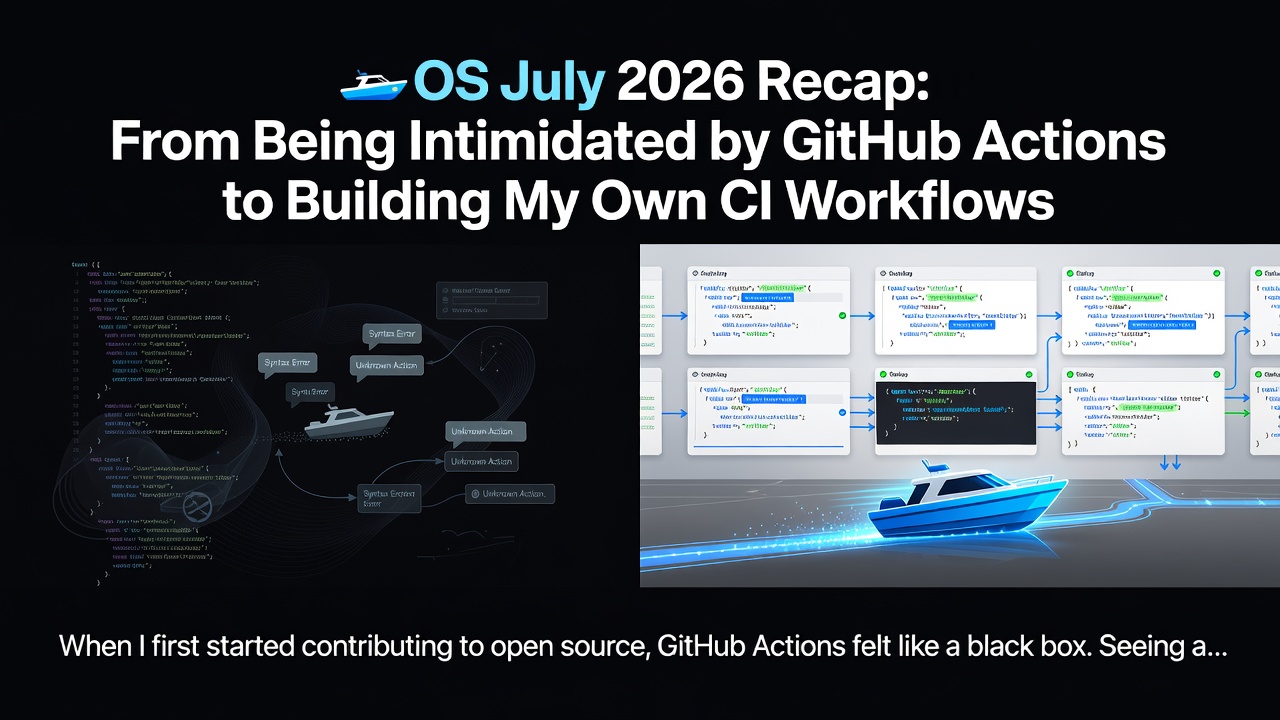


When I first started contributing to open source, GitHub Actions felt like a black box.
Seeing a failed workflow on my pull requests was intimidating because I didn't really understand what was happening behind the scenes.
Well, this month, I decided to change that.
What I Worked On
I implemented GitHub Actions across three of my project repos.
My main focus was:
- Adding
Markdownlintfor Markdown quality - Adding
Pylintfor Python linting. - Updating documentation while integrating CI.
What I Learned
The biggest lesson wasn't technical — it was changing my mindset.
A failed workflow isn't something to fear.
It's simple feedback.
Whether it's markdownlint warning or a pylint error, each failure helps improve the project.
Looking Ahead
Most of this month was spent improving my own projects, so I didn't contribute much to external repositories.
Next month, I want to build on this foundation by contributing to more open source projects and applying what I've learned.
Sometimes, learning the tools behind open source is just as valuable as making another pull request.

I'm curious
What part of GitHub Actions or CI/CD was the most challenging when you first started?
Or
If you are just getting started, what's the biggest thing that's still a mystery to you?
I'd love to hear your experience and tips in the comments.
Transparency Note: I used AI as an editor—not as the author. For this article, it helped refine the structure and improve the English grammar. The technical content, experiments, opinions, and conclusions are my own and were reviewed by me before publishing.
0 Comments
Log in to join the conversation.No comments yet. Be the first to share your thoughts.