
What Is Social Engineering? A Beginner’s Guide
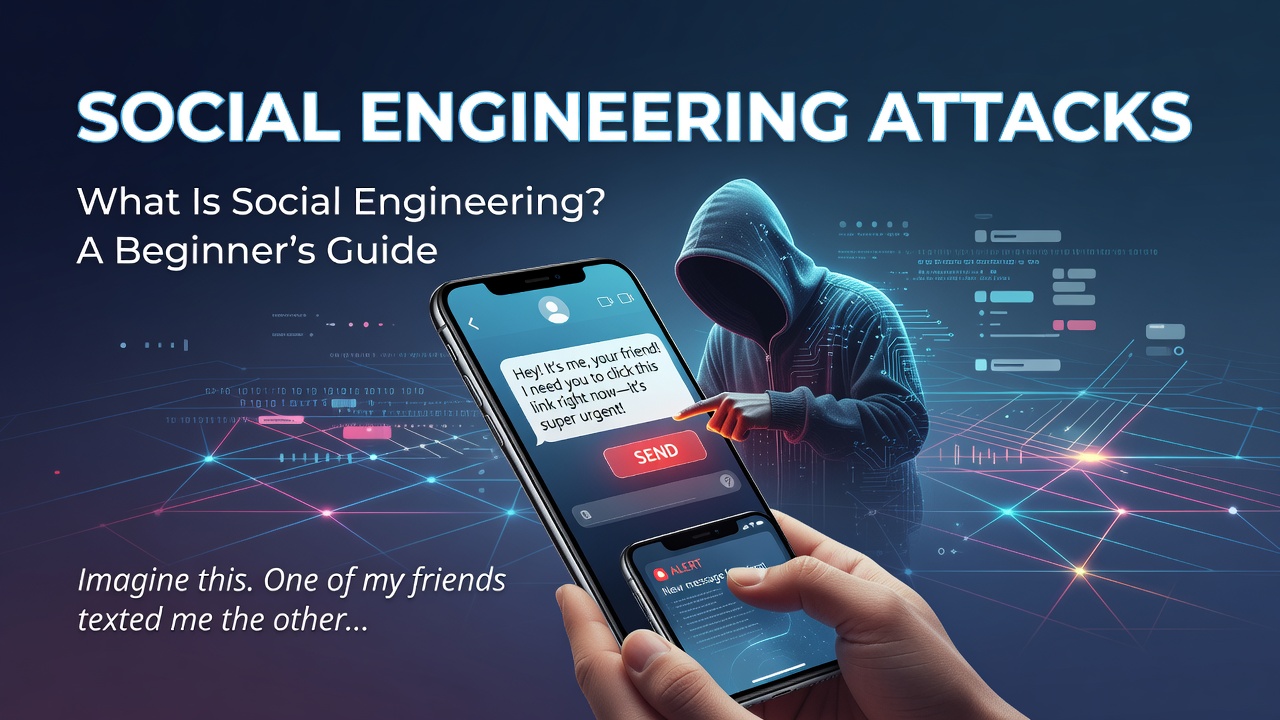
Imagine this.
One of my friends texted me the other day that her instagram was blocked and i should help her unblock it, i asked how may i help? And the next thing is that she said meta sent me a verification code as her facebook friend and i should send it to her so she can unblock her instagram.
Guess what?
If i had sent the code to her, then i should have helped her to hack my facebook account.
She didn't break into my phone or guess my password. She simply tricked me into helping her.
This is social engineering
What is Social Engineering?
Social engineering is a cyberattack where criminals manipulate people into giving away sensitive information, money, or access to systems.
they exploit human trust instead of attacking computers directly.
Attackers know that it is often easier to fool a person than to break through strong security software.
Think of it this way:
A thief can spend hours trying to pick a lock.
Or they can simply knock on the door, pretend to be a delivery person, and ask you to open it.
Social engineering works the same way.
Why Does Social Engineering Work?
Social engineering succeeds because it takes advantage of normal human emotions and behavior.
Why Small Businesses Are Easy Targets
Many small business owners believe hackers only target large companies.
That isn't true.
Small businesses often have fewer security measures, making them vulnerable and attractive targets.
For example, imagine you own a small fashion store.
One morning, you receive an email that appears to come from your supplier asking you to update your payment information.
Without verifying the request, you send payment to a fraudulent bank account.
The business loses money, not because its systems were hacked, but because someone was successfully deceived.
How To Protect Yourself from social engineering attacks
The good news is that social engineering can often be stopped with simple habits.
Final Thoughts
Cybersecurity isn't only about antivirus software and strong passwords. It's also about understanding how attackers manipulate people.
Social engineering reminds us that the biggest weakness in security is often not technology, its human behavior.
The more you learn to recognize these tricks, the harder it becomes for scammers to fool you.
Using public wifi networks to access your banking apps is also not advisable.
The strongest firewall in the world cannot protect someone who willingly gives away their password.
Technology matters, but awareness matters even more.
Stay curious.
Stay cautious.
Always verify before you trust.
I recently wrote a beginner's guide to social engineering. What are some common scams you've encountered?
NB: originally published on medium
0 Comments
Log in to join the conversation.No comments yet. Be the first to share your thoughts.