
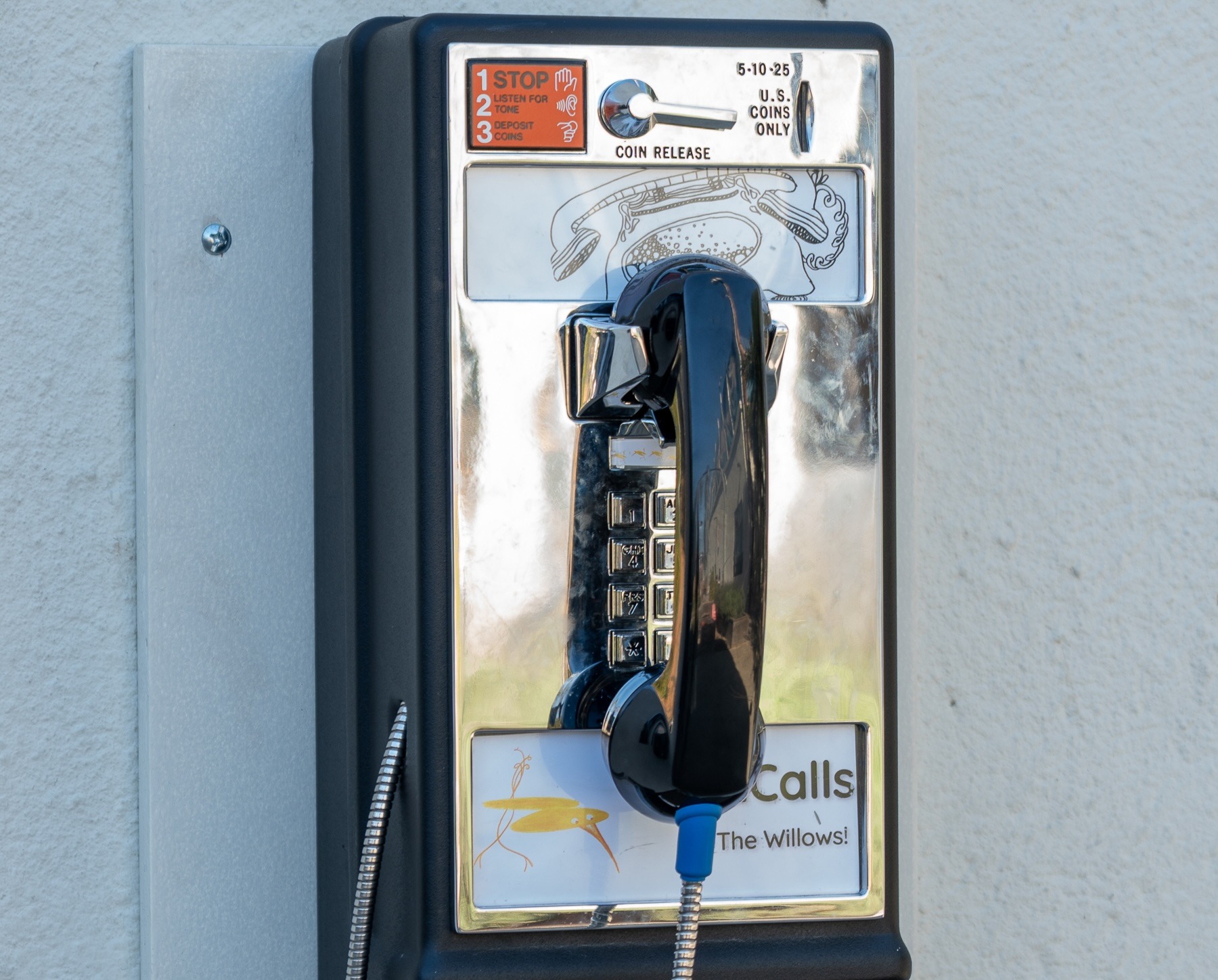
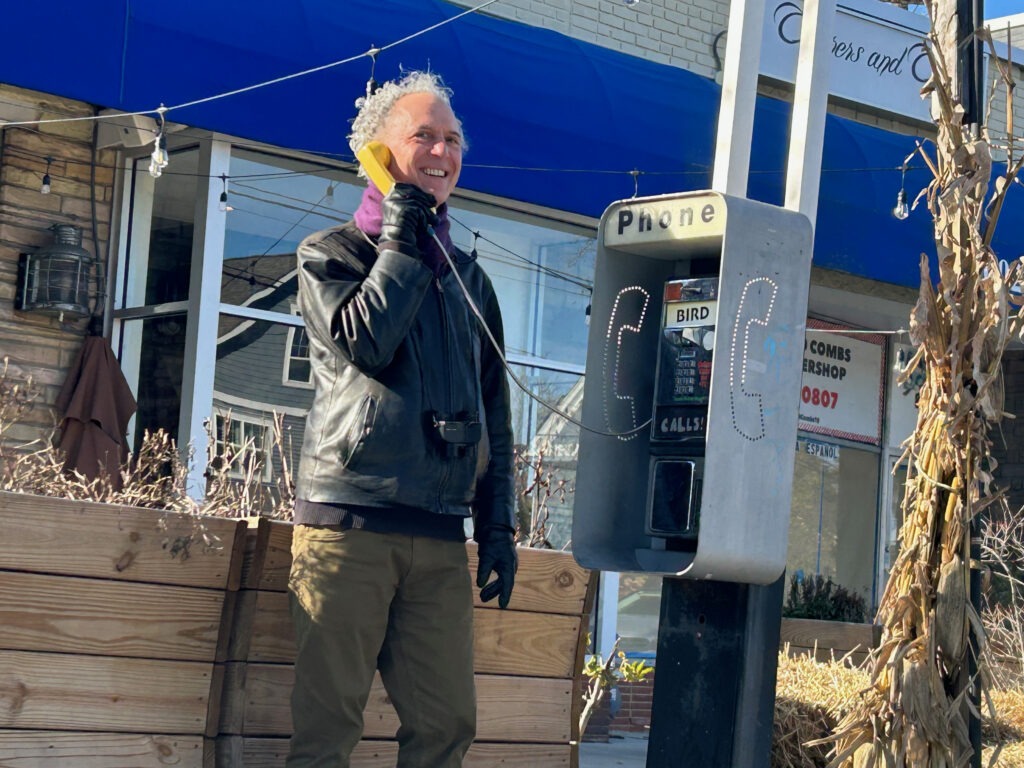
There’s a yellow payphone bolted to a wall in Takoma Park, Maryland. Pick up the handset, press a number, and instead of a dial tone you hear a night heron, a red-tailed hawk, a wood thrush. No spare change needed. No app to download. Just a phone, a button, and the sound of a bird that might be living in the creek down the street.
This is BirdCalls, a project by David Schulman – sound designer, violinist, composer, audio producer, and adjunct lecturer at Georgetown University – and it’s been quietly running on Arduino hardware for almost a decade.
Arduino has always had a particular kind of relationship with artists and musicians. Ease of use and accessibility were never just selling points for makers and engineers; they opened the door for people whose first instinct is creative, not technical, to bring an idea to life without needing a degree in electronics to do it. BirdCalls is a clear example of what happens when that door is wide open.
“An old piece of tech that reconnects us to nature”
The project began in 2016, when Takoma Park asked residents for ideas on what to do with a payphone that technology had made obsolete. Schulman’s pitch: hot-wire it to play birdsong. He’d long been familiar with the field recordings held by the Cornell Lab of Ornithology’s Macaulay Library, and he’d always loved payphones as objects. BirdCalls put the two together.
As NPR reported when they featured the project in 2024, the payphone has become a local fixture: picked up by neighborhood children, by adults waiting at the bus stop, by anyone curious enough to lift the handset. Schulman told NPR he’d love to build more BirdCalls boxes elsewhere, featuring birds specific to those places. He mentioned wanting to feature coua calls from Madagascar, sounds so unusual people might wonder what planet they’re hearing from. When we spoke to him recently, he captured the spirit of the whole project in a simple sentence: “I like the idea of an old piece of tech that reconnects us to nature.”
These days, STEM education and AI innovation make headlines every day – and rightly so. But BirdCalls reminds us that technology has always had another job too: giving people a way to express something, and to experience something, that words alone don’t quite cover. A payphone that plays birdsong isn’t trying to optimize anything. It’s just offering a sensory experience, and helping you notice the world around you a little more.
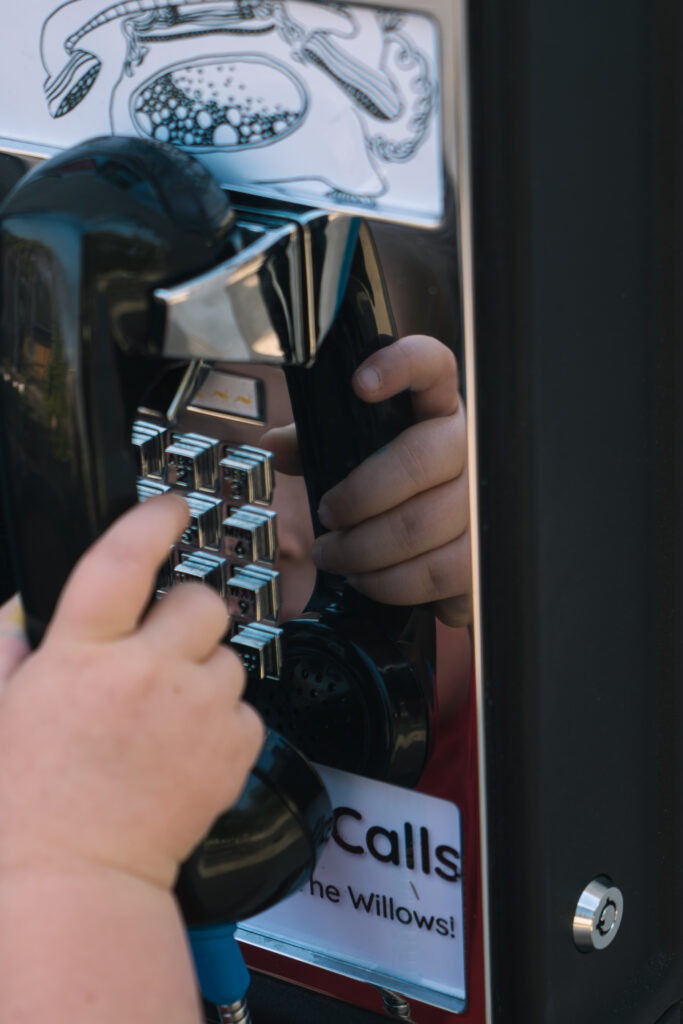
Photo provided by The Willows Community School, Culver City
From a Maryland sidewalk to a Los Angeles schoolyard
The project’s reach has grown well beyond that one yellow box. At The Willows Community School in Culver City, California, a BirdCalls phone was installed on the outside of one of the buildings after Head of School Lisa Rosenstein heard the NPR segment and asked science teacher Ann Istrin to look into bringing one to campus. Donated by The Willows’ Class of 2024, the phone is now used by students throughout the day and features ten birds native to the local area, from the Allen’s Hummingbird to the Great Horned Owl. Rosenstein described the phone as an “interactive, experiential, and inspirational tool” that extends the science curriculum while connecting students to the nature around them.
That story is about to repeat itself on the other side of the country. This fall, Wake Forest Elementary School in North Carolina will have its own BirdCalls phone installed and running – a new chapter for a project that started with one phone box and one town’s birds, and keeps finding new schoolyards and new species to feature.
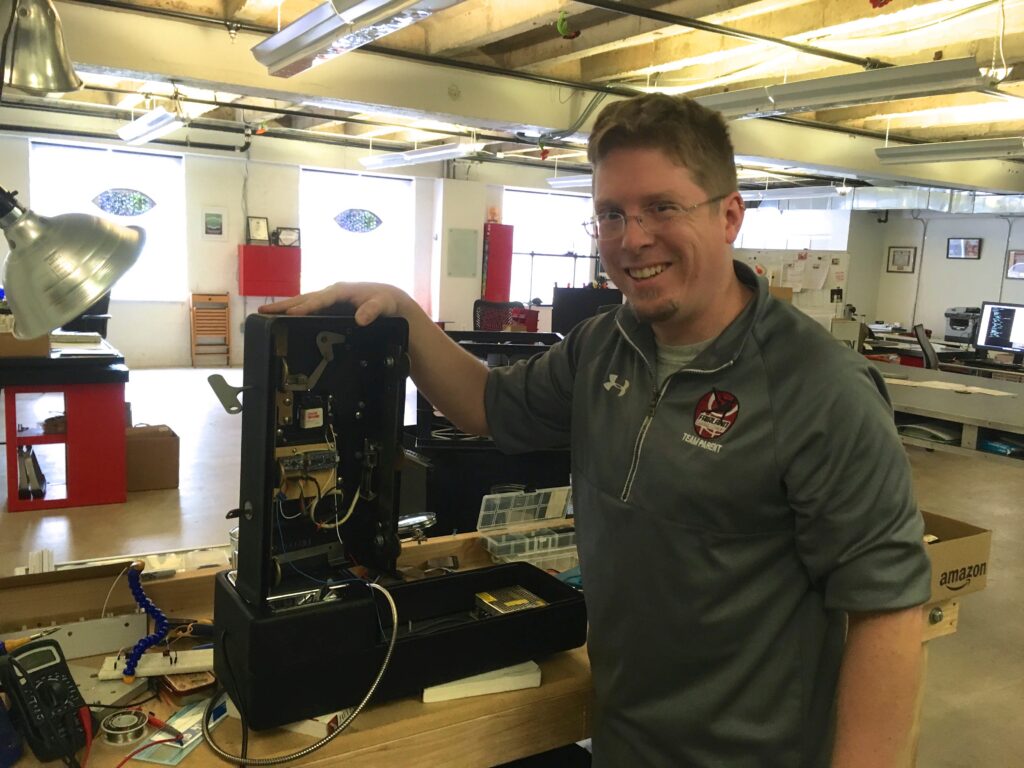
Branden Hall, hot-wiring the original BirdCall phone
Simple by design
The technology behind BirdCalls is refreshingly modest. The original 2016 phone was hot-wired by programmer, designer, and engineer Branden Hall, who has continued to generously consult on code troubleshooting for Schulman’s more recent installations. In 2024, Schulman worked with programmer and engineer Ryn Slack to build new code from scratch for the next generation of BirdCalls phones, adding capabilities like randomized playback, so the experience feels a little different every time someone picks up the handset.
Across the various installations, the team has relied on Arduino® UNO™ and Arduino® Nano™ boards. There’s no cloud connection, no app, no Wi-Fi required – the device just needs power. All the audio files and bird information live locally on an SD card, which means each BirdCalls phone runs entirely on its own, indefinitely, with nothing to maintain beyond keeping the lights on.
That simplicity is the whole point. Schulman didn’t need a complex system to build something that’s meant something to thousands of people across two coasts. He needed a board reliable enough to trust, simple enough to learn quickly, and flexible enough to get out of the way of the idea. Sometimes the most interesting use of a microcontroller isn’t the most technically ambitious one. It’s the one that gets a kid at a bus stop to stop, pick up a phone that doesn’t ring, and listen to a bird they didn’t know was their neighbor.
Arduino, UNO, and Nano are trademarks or registered trademarks of Arduino S.r.l.
0 Comments
Log in to join the conversation.No comments yet. Be the first to share your thoughts.