
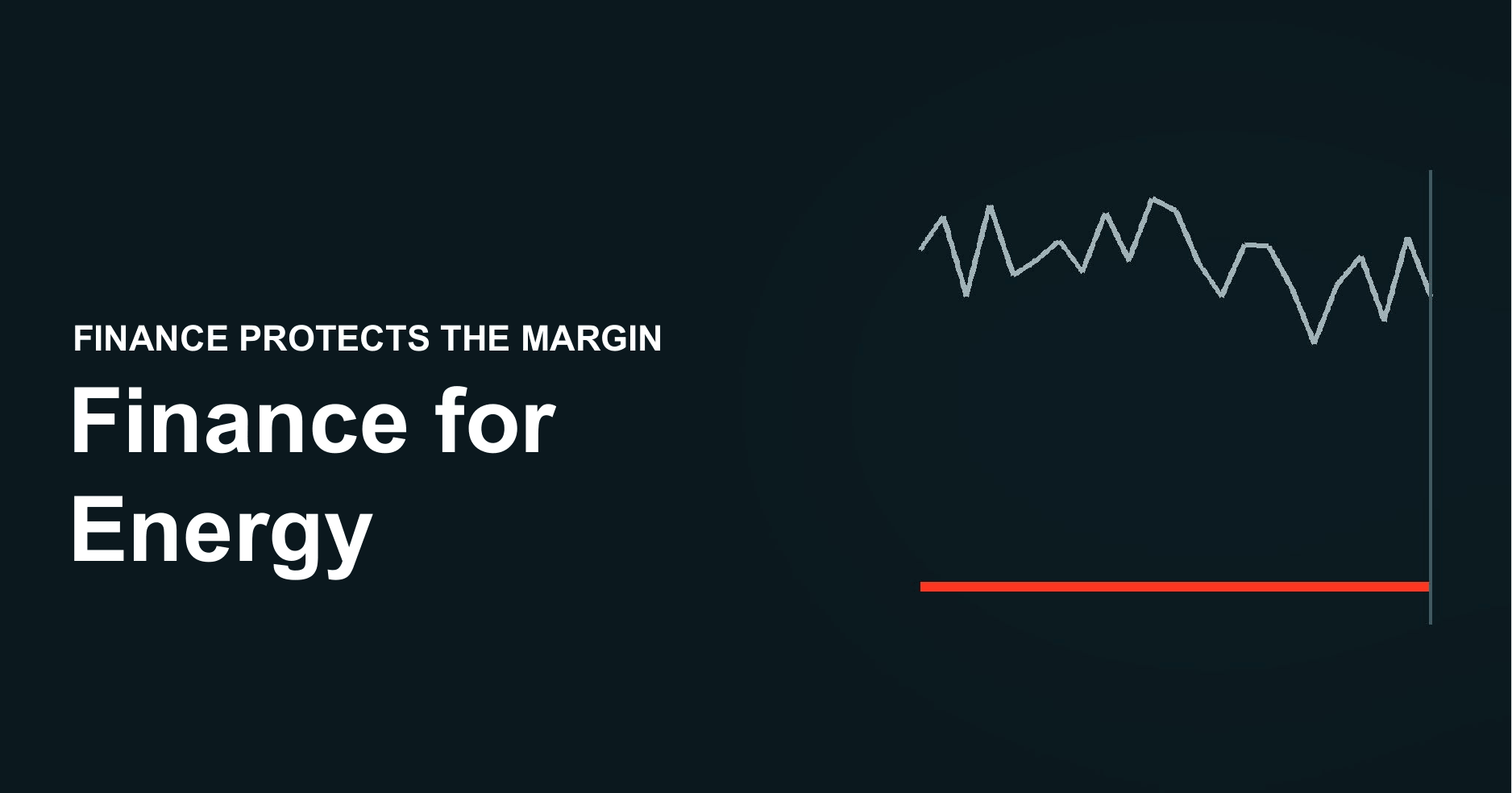
Ask an energy CFO where this year's margin is landing and you will always get a hard-won answer, born from the discipline and rigor they bring to the business. And then a list: the trade that ran below margin as power prices shifted overnight, the contract that settled at a different value than the books assumed, the capital pouring into the buildout to keep up with demand. Any one of those is the product of multiple systems, and each is increasingly shaped, and made faster and more complex, by automation and agents. The mission of finance is to understand the relationships among all of those variables, and more, to see how they move the margin as prices shift, and to steer the organization continuously in the right direction.
How turning volatility into margin became finance's front line
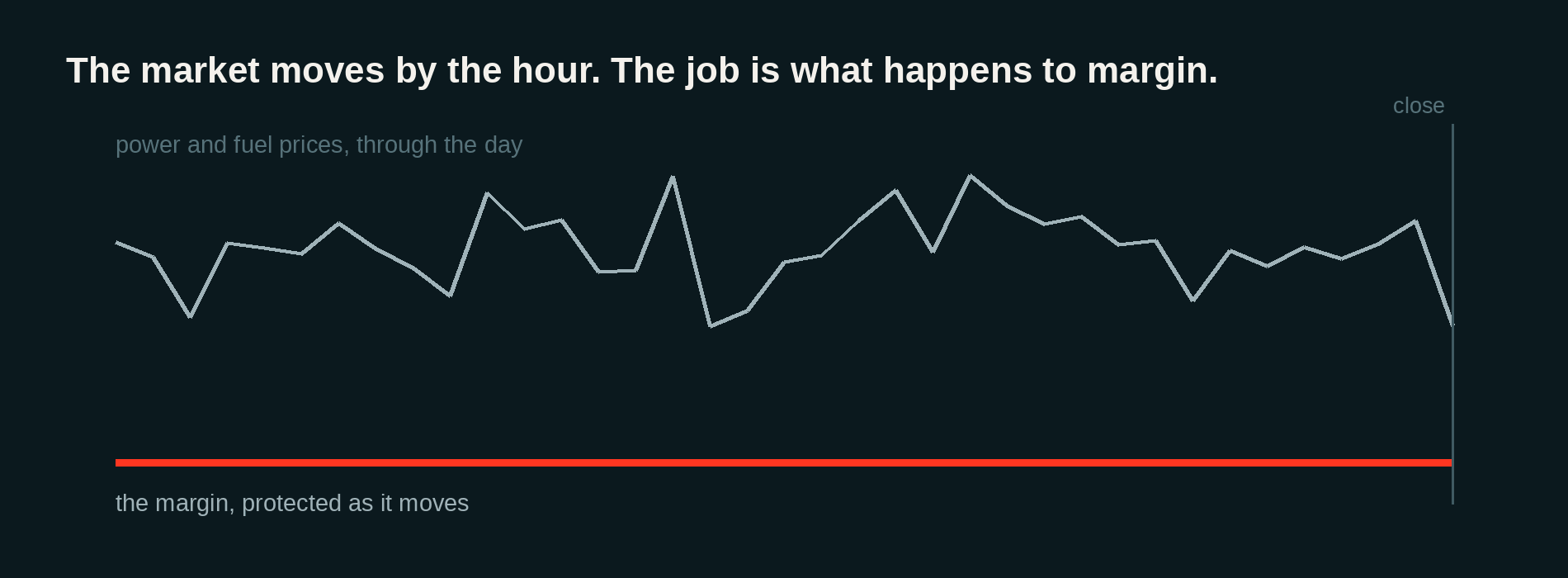
Energy is a business of volatility. Power and fuel prices move by the hour, and the margin on every asset and trade moves with them. Revenue comes through power purchase agreements and hedges whose value can shift between the day they are signed and the day they settle. And a historic buildout, driven by surging demand for power, is pulling in capital faster than plans can keep up. Turning that volatility into margin, rather than letting it quietly erode the business, has always been finance's job here, and it has only grown harder as AI demand reshapes the load, prices spike near data centers, and the forward curve moves faster than the books can keep up. This is the environment in which energy companies operate, and their finance departments are the constant through all of it, helping the business understand and act on rising complexity.
Now that complexity is compounded by agents shaping how power is dispatched, how a hedge is set, and how capital is committed. Wholesale power near data centers has run as much as 267% above normal, and the swings are only widening (Bloomberg). The pace will vary by operator, but the waves of agents reshaping trading and finance systems, AI spend, and the grid are here to stay.
Why a word like ontology now matters to energy finance
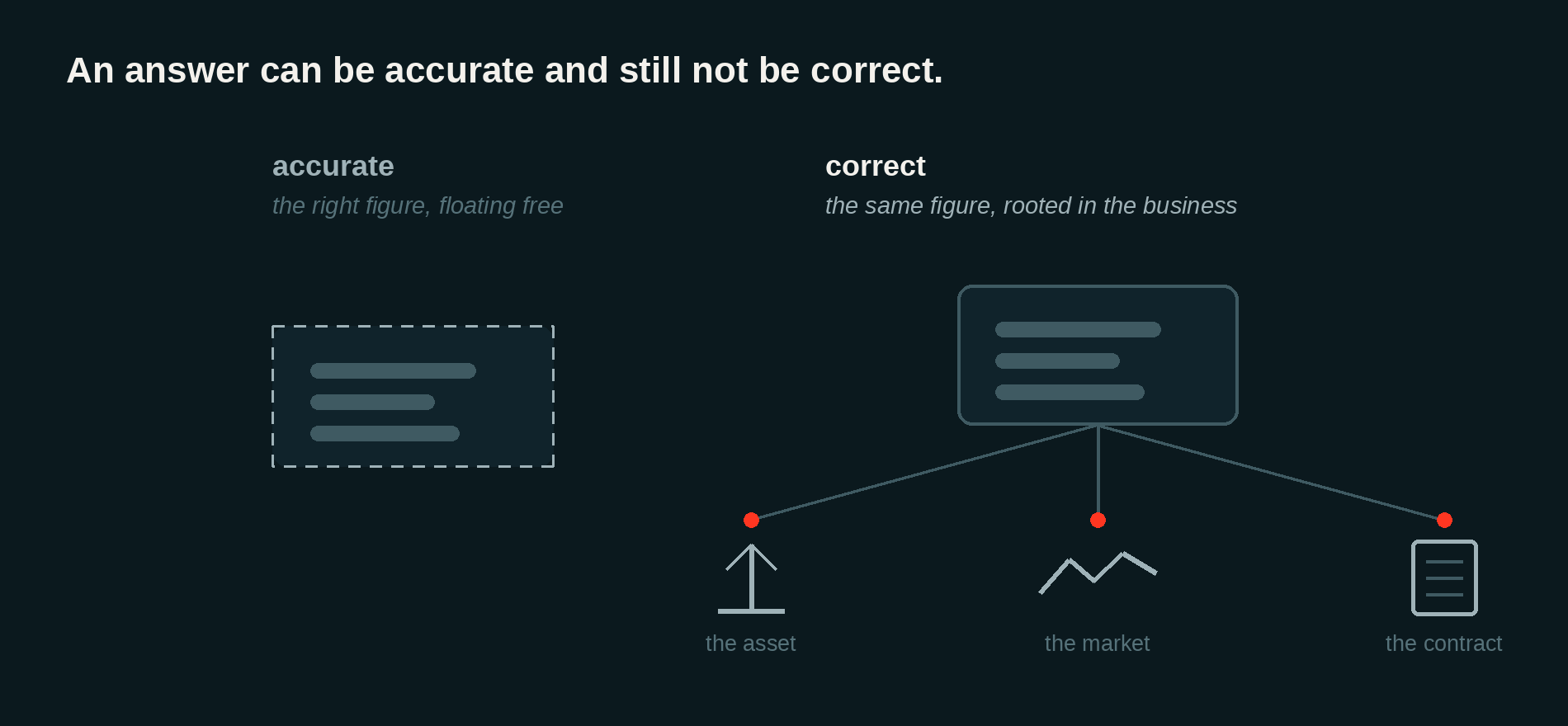
Finance has always been good at finding the number, even when it is buried in complexity. But they are also the first to let the business know the numbers do not tell the whole story. What matters is the meaning behind them: which asset, which market, which contract, and how each of those is changing as the business moves. An answer can be perfectly accurate and still not be correct, because it rests on a partial or dated picture of how the business actually works. Put plainly, is the number seen in the full context of the business?
That is what an ontology does: it captures meaning and keeps it current as the business changes. As Ali Ghodsi puts it, most enterprise AI is guessing with false confidence, a context problem, not an intelligence problem. But, as with every technology, it is how the capability is delivered that makes all the difference. Which brings us to a new kind of ontology, built for the demands energy finance places on it.
Where Genie becomes the answer
Nowhere does this move faster than in energy. Prices, fuel costs, and the forward curve change through the day, and a read on margin taken in the morning can be wrong by the afternoon. So the ontology itself has to keep moving. It has to learn from the systems the business runs, sharpen with every question, and adapt as prices and positions change, so the context stays live rather than captured once and left behind.
This is where Genie becomes the answer. Databricks built Genie as a data-smart AI coworker: a coworker a finance leader asks a direct question and gets a trustworthy, sourced answer in return, grounded in Genie's ontology and governed at every step. It is built to help finance have more accurate answers and, more importantly, deliver trusted actions, beyond just providing readouts of what has happened.
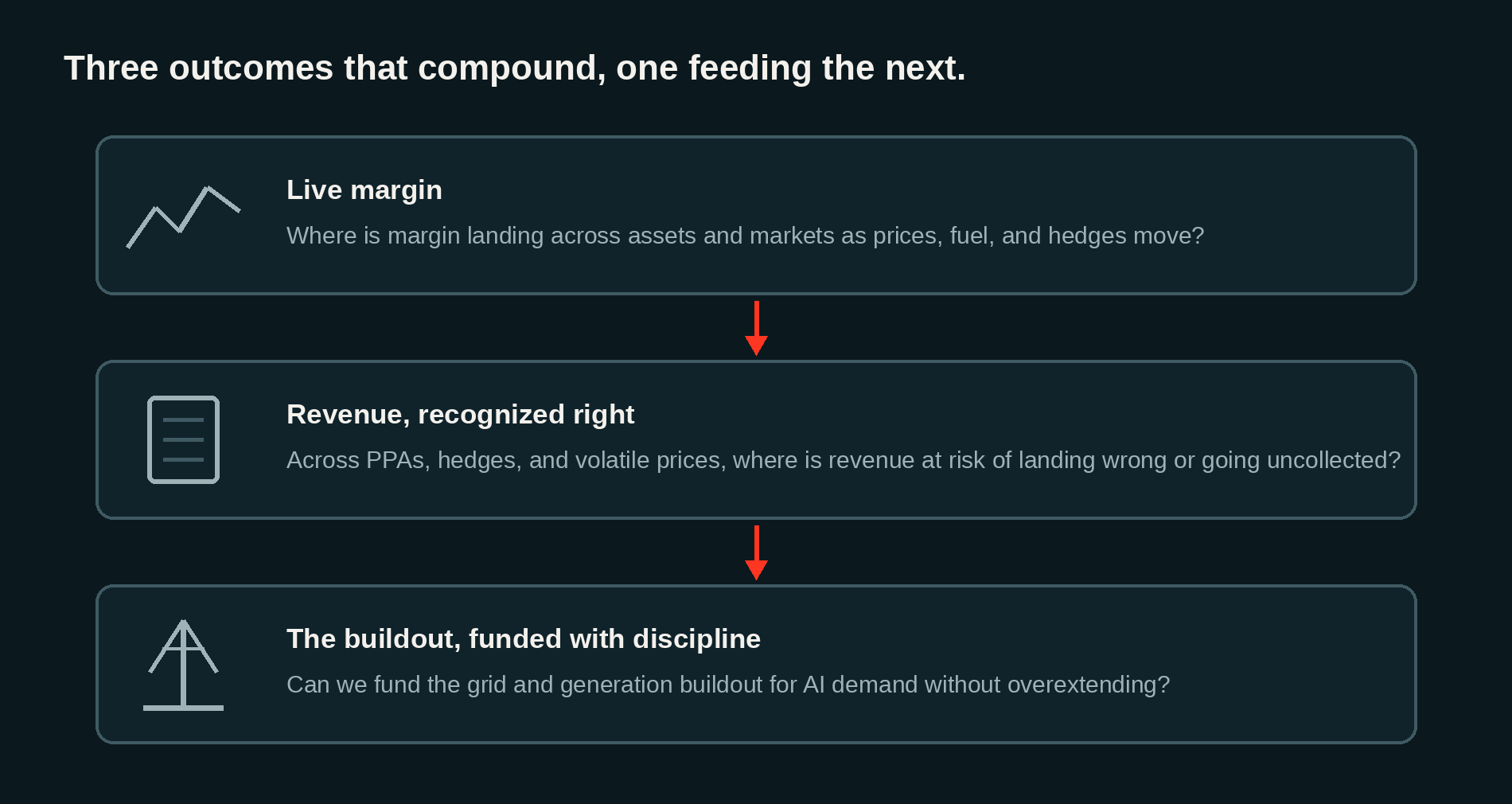
Consider the three questions on the minds of every energy finance team, each tied to one of three outcomes that compound, one feeding the next. For each, Genie does more than retrieve the data and answer. Its ontology learns the business, sharpens with every question, and shows its work:
› Where is margin landing across our assets and markets, and what is driving it as prices, fuel, and hedges move?
Start with live margin. Power and fuel prices move by the hour, so the margin on an asset or a trade at noon can be gone by the close, and you can only defend what you can see as it moves.
› Across our PPAs, hedges, and volatile prices, where is revenue at risk of being recognized wrong or left uncollected?
Then the revenue itself. A power purchase agreement or a hedge can settle at a very different value than it was booked at, and by the time the books close the misstatement is already there.
› Can we fund the grid and generation buildout for AI demand without overextending?
Then the buildout. Demand for power is surging, and the capital going into new grid and generation is enormous, so the value is in matching each project's pace to the cash it draws before funding tightens.
That is the difference between reporting what already happened and continuously learning about your business, getting smarter with every interaction. And because every figure traces to its source, every permission holds, and the cost of the AI itself stays governed under one model, it is an answer finance can trust to act on. Genie readies the move, to hedge an exposure, to correct a settlement, to phase a project, and a person in the loop makes the call.
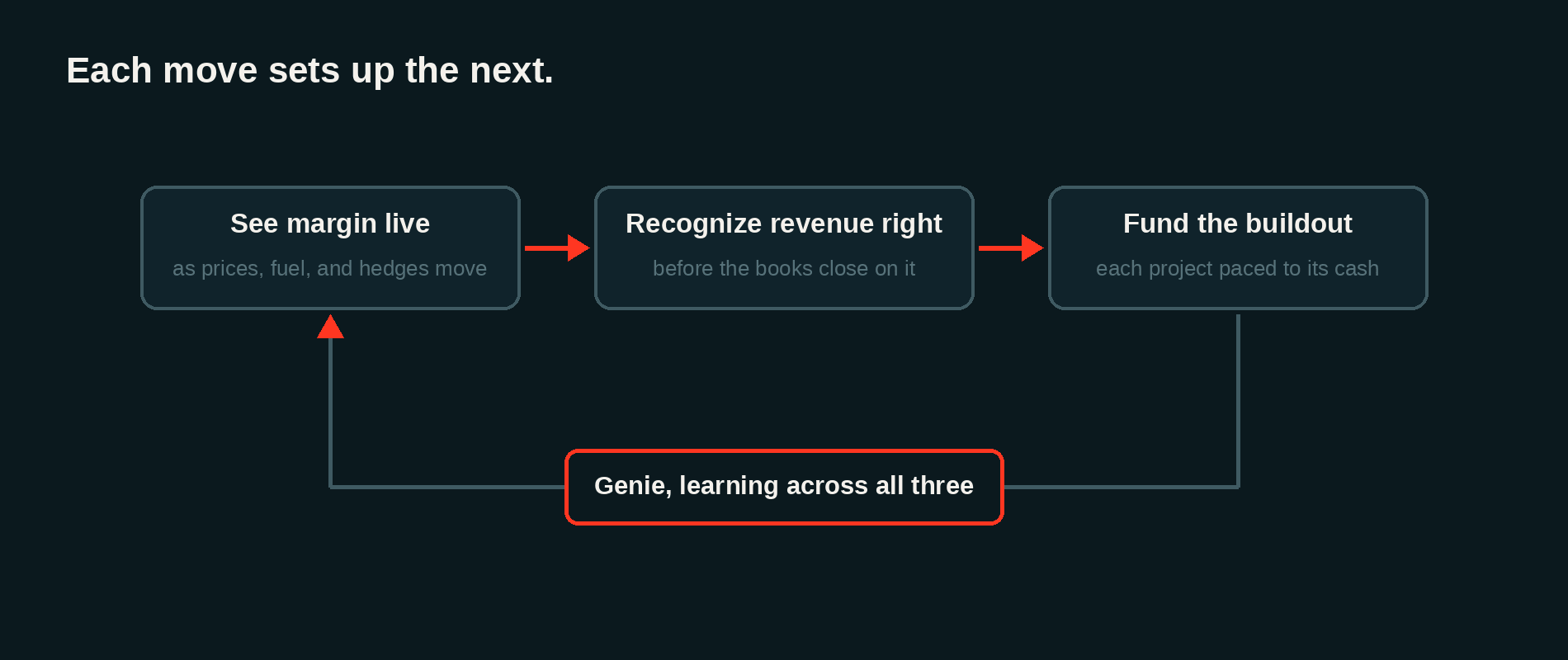
Finally, Genie's learning across all three comes together. Seeing live margin as prices move lets you recognize the volatile revenue right and fund the buildout with discipline, so the volatility becomes margin you keep. That turns three separate fights into one reinforcing mechanism: each move sets up the next, and the momentum compounds.
A data-smart AI coworker built for the way energy finance works
This is the force multiplier built for what finance departments require. The critical people driving rigor and discipline across the business can now lean on a data-smart AI coworker that is always getting smarter, always current, always governed, truly understanding the business. The world's demand for power will only grow, while a tool like Genie will help finance turn that volatility into margin and protect it.
See what a data-smart AI coworker looks like for finance. Databricks Genie is available today.
Frequently asked questions
What is changing for finance in energy?
More of the decisions that move margin, hedging, revenue recognition, and capital, are made by agents. Finance's mission to protect the margin through the volatility is unchanged; what has grown is the speed and complexity of change, which finance tools must understand and govern.
Does Genie make trading, dispatch, or hedging decisions?
No. Those calls belong to the trading desk, operations, and treasury. Genie gives finance an accurate, governed view to see a forming risk early and guide or direct the owners who act on it.
Why do ontology and governance matter to an energy CFO?
Ontology captures what the numbers mean for your business and keeps it current, so an answer is correct and not just accurate. Governance keeps every figure traced, permissioned, and cost-controlled. Together they make an answer safe to act on.
How is Genie different from an AI dashboard or BI tool?
A dashboard shows you what the data says. Genie is a data-smart AI coworker that helps you act on it, grounded in your ontology and governed end to end, with a person deciding.
0 Comments
Log in to join the conversation.No comments yet. Be the first to share your thoughts.