
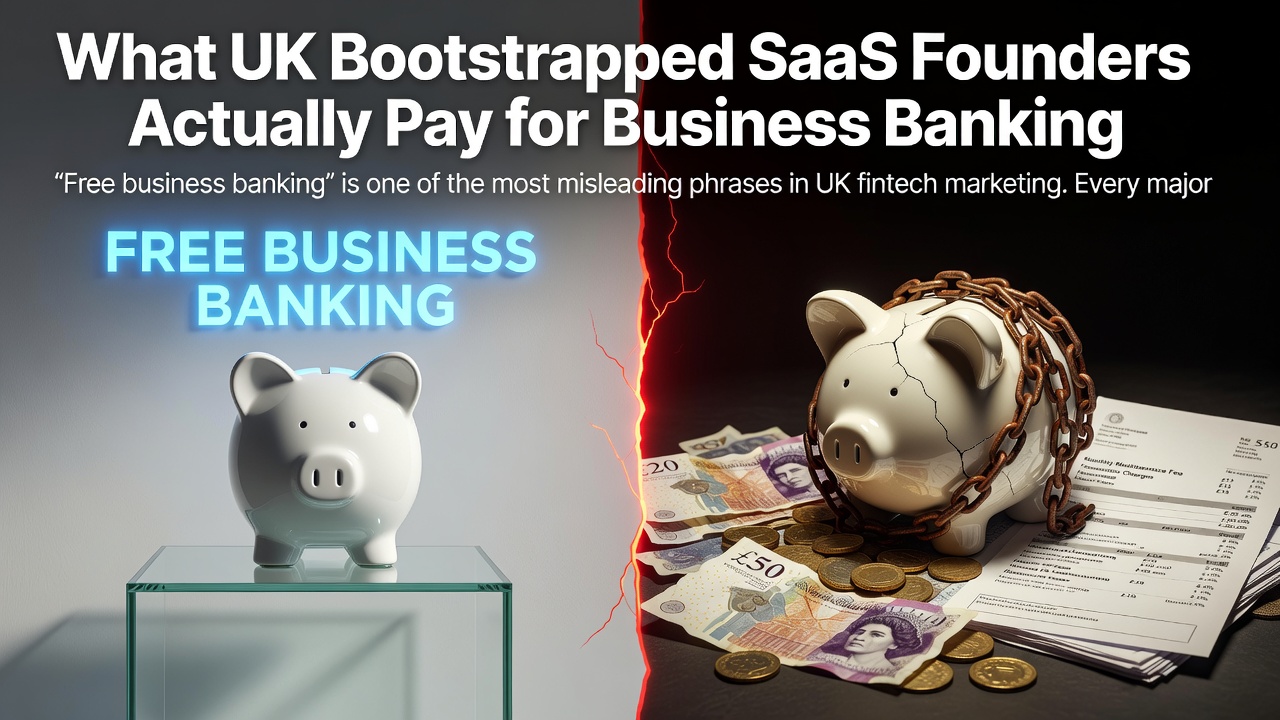
"Free business banking" is one of the most misleading phrases in UK fintech marketing. Every major digital bank advertises a free tier — Starling, Tide, Mettle, Monzo, Revolut — but "free" depends entirely on how many transfers you make, whether you invoice, and whether you touch foreign currency. Here's what five common bootstrapped-founder scenarios actually cost, worked out line by line.
Scenario 1: Solo SaaS founder, 10 transfers a month, no invoicing
You're paying a couple of contractors and a hosting bill. Nothing fancy.
- Starling: £0. Unlimited free UK transfers, no monthly fee.
- Mettle: £0. Same story, plus FreeAgent (~£150/year value) thrown in.
- Monzo Lite: £0.
- Tide: 5 transfers free, then 5 × £0.20 = £1/month.
- Revolut: £10/month minimum (Basic plan fee applies regardless of volume).
At this volume, Starling, Mettle, and Monzo Lite are functionally tied at zero cost. Revolut is the expensive outlier here because you're paying for multi-currency capability you're not using.
Scenario 2: Invoice-heavy consultancy, 50 transfers a month, client invoicing
You bill clients directly and chase payments monthly.
- Tide: 5 free transfers, then 45 × £0.20 = £9/month, plus 3 free invoices monthly (extra invoices need the paid Smart plan at £12.49/month if you exceed that).
- Starling: £0 for transfers, but invoicing is a £7/month add-on — so roughly £7/month.
- Monzo Pro: £9/month flat, invoicing included.
- Mettle: £0, invoicing included via bundled FreeAgent the cheapest option if you don't need multi-user access or international payments.
For a solo consultancy that only invoices UK clients, Mettle wins on pure cost. The moment you need a second user or an international client, that calculus changes fast.
Scenario 3: Cash-heavy small retailer/market trader, £2,000/month in cash deposits
- Starling: 0.7% at the Post Office, minimum £3 — on £2,000 that's £14/month.
- Tide: 0.5% at Post Office (min £2.50) or 3% at PayPoint Post Office route costs £10/month, PayPoint costs £60.
- Mettle: up to £500/day free at the Post Office, so £2,000 spread across the month can land at £0 if you deposit in smaller batches but confirm current terms directly with Mettle, as cash deposit policy details vary.
- Monzo Lite: £500/month free, so anything above that starts incurring charges.
Cash-handling businesses should model this scenario specifically it's the one place "free" digital banking quietly becomes the most expensive option on the list.
Scenario 4: Exporting SaaS, billing US and EU clients in USD/EUR
- Revolut: £10/month, but you get 25+ currencies at interbank rates for the first £1,000 monthly, then 0.6% FX on weekdays (1% weekends). For a founder converting say £5,000/month, that's roughly £10 + (0.6% × £4,000) = £34/month.
- Starling: EUR add-on only, limited multi-currency workable for EU-only, not for USD.
- Others: no meaningful multi-currency support, meaning you'd be paying your card processor's FX markup on top of a domestic-only account, which is typically a worse rate than Revolut's interbank pricing.
If you're actually invoicing in foreign currency every month, Revolut's £10 fee is usually cheaper than eating a worse FX spread elsewhere.
Scenario 5: Growth-stage, want lending headroom
Only one account on this list offers overdrafts and business lending as a fully licensed bank: Starling. Monzo Business also offers overdrafts and loans subject to credit checks.
Tide, Mettle, and Revolut don't offer overdrafts at all. If you're planning to need short-term credit as you scale, that's not a fee comparison — it's a structural feature only some of these accounts have.
The actual lesson
None of these accounts is "cheap" or "expensive" in the abstract cost is a function of your transaction pattern, not the marketing page. Map your real monthly numbers (transfers, invoices, cash, foreign currency) against the scenario closest to yours before deciding, because the gap between the cheapest and most expensive option for your specific pattern can be £30-40 a month real money for a bootstrapped founder.
All fees and limits verified against provider websites as of mid-2026 banking fee structures change, so confirm current pricing before choosing an account.
0 Comments
Log in to join the conversation.No comments yet. Be the first to share your thoughts.